Time to say Goodbye. Again.
 Prologue
You are cordially invited to read the following notes – but please accept: though reading the reflections is hopefully at times entertaining, the notes are not easy to comprehend, presenting thoughts as they are: interconnected, being a complex structure that cannot be easily deconstructed without doing damage to the overall existence. It had been the easy ways of looking at history that allowed the total demonisation of Zarathustra – in the postscript you will see the reasoning behind this reference. Having said this, you should allow the postscript to be a postscript, as I would otherwise made it myself a Prologue or a Prolegomena.
Looking once back, aiming on a huge leap forward – or: Luhmann’s Strawberry Cake
Each second we live is a new and unique moment of the universe, a moment that will never be again. And what do we teach our children? We teach them that two and two make four, and that Paris is the capital of France.
When will we also teach them what they are? We should say to each of them: Do you know what you are? You are a marvel. You are unique. In all the years that have passed, there has never been another child like you. Yes, you are a marvel. And when you grow up, can you then harm another who is, like you, a marvel?
You must work, we must all work, to make the world worthy of its children. – Pablo Picasso
Being Human: Attraction And Relationships ~ The Journey From Initial Attachments To Romantic Love
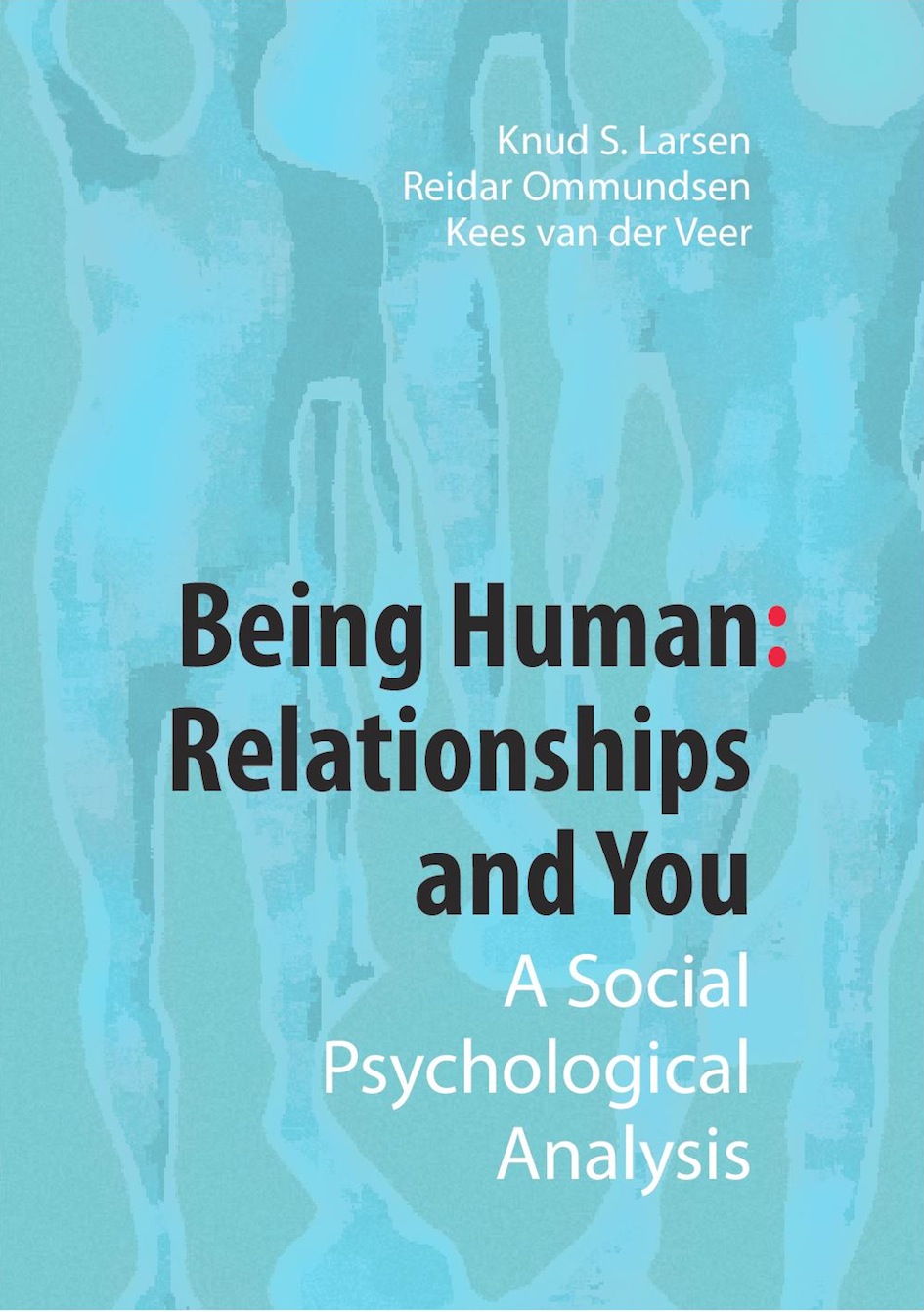
December 2018: Being Human. Relationships and You will be published completely online soon: Being Human – Contents
Many years ago two boys were walking home from school. They were seven years old, lived in the same neighborhood, but went to different grade schools. Although living close to each other they had not met before running into each other on this day on the road leading up the hill to their neighborhood. Both seemed quite determined to assert themselves that day, and soon they began pushing each other that gradually turned to wrestling, and attempts to dominate. After what seemed hours, the two little boys were still rolling down the surrounding hills as the sun was going down. Neither succeeded in achieving victory that day. In fact, they never again exchanged blows but became the best of friends. Today it is more than 50 years later, and their friendship has endured time and distance. Friendship is like a rusty coin; all you need to do is polish it at times!
In this essay we shall examine the research on attachment, attraction and relationships. The intrinsic interest in these fields by most people is shared by social psychologists, and attachment, attraction, and love relationships constitute one of the most prolific areas of investigation in social psychology. The early attachment theory advanced by Bowlby (1982) emphasized the importance of the field when he suggested that our attachments to parents to a large extent shape all succeeding relationships in the future. Other research focus on exchange and communal relationships and point to the different ways we have of relating to each other. The importance of relationships cannot be overemphasized since we as humans have a fundamental need to belong. Relationships also contribute to the social self as discussed in the book, and effects social cognition discussed in the same (see: at the end of this article). The variables that determine attraction may be understood theoretically as functions of a reward perspective.
The importance of relationships is demonstrated by findings that show that among all age groups relationships are considered essential to happiness (Berscheid, 1985; Berscheid & Reis, 1998). The absence of close relationships makes the individual feel worthless, powerless, and alienated (Baumeister & Leary, 1995; Stroebe & Stroebe, 1996). Our very humanity is defined by our relationships (Bersheid & Regan, 2005).
1. Attachment: The start to relationships
This chapter is about the development of attachment, intimate relationships between adults, and the road leading toward love relationships. No greater love has a person than giving his life for another. This idea from the Bible brings to mind the passion of deep commitment and the willingness to sacrifice, even in the ultimate sense. This willingness to sacrifice is one manifestation of love, but as we all know there is much more to relationships and love.
The research described in the following pages concerns early attachment, and attraction and love between adults. These relationships may be institutionalized by marriage, or (registered) partnership, or take some other form (living-apart-together) in relationships. Since the vast majority of romantic relationships exist between heterosexual partners we describe the journey from attraction to romantic relationship from this perspective. There is little research so there is no way to know, however, there is no convincing reason to assume that this journey is completely different for homosexuals.
Most people will experience the delirious feelings of infatuation and love sometime in their lives. What is love? How can we achieve love? And how can we build these feelings into lasting relationships? Are there ways we can improve our chances for satisfying long-lasting and happy relationships? This chapter will show that there are behaviors to avoid, but that we can also contribute much to lasting attachments. Long-lasting romance depends on positive illusions and bringing novelty and renewal to our intimate relationships.
Efficacy of Tourism as a Tool for Local Community Development: A Case Study of Mombassa, Kenya

Mombassa Market Hall
Having unique indigenous cultures, nature-based attractions, beautiful landscapes, and pleasant weather conditions, local communities in Africa, and other Third World countries, are increasingly being promoted and marketed in major tourist generating countries, particularly in Europe and North America, as offering immense touristic and recreational opportunities. Particularly, indigenous communities in the Third World are perceived as providing abundant opportunities for rich tourists from the North who have got the financial resources to spend in adventure and exotic recreational activities. As a consequence, an increasing number of international tourists are travelling to different tourist destinations in Africa and other less developed regions of the world. In 2001 for instance, over 28 million international tourists, mainly from Europe and North America, travelled to different destinations in Africa. It is further estimated that with the current international growth rate of the tourism industry, over 77 million international tourists will visit Africa by the year 2020 (WTO 2004).
Neo-classical economists and development experts contend that unlike factor driven technology based development, local communities in Africa and other parts of the Third World have a comparative advantage in the development of tourism and other non-technology based economic sectors. The development of tourism amongst local communities is, therefore, perceived as fitting quite well with the ‘natural process of development based on comparative advantage’ (Brohman 1996). This argument is based on the premise that local communities, particularly in Africa, should mainly specialise in primary exports, including tourism, where they have comparative advantage rather than depending on technology based economic sectors that do not conform with the principles of comparative advantage in the global market demand.
De toekomst van de relatie Nederland – Suriname IV: De hulprelatie sinds 1975
 1. Inleiding
Vanaf 1975 zou de omvang en de wijze van besteding van ontwikkelingshulp alsmede de migratie vanuit Suriname de relatie tussen beide landen blijven bepalen. Over de besteding van de hulp ontstond al spoedig een officiële verhouding waarin oud zeer, achterdocht, wrevel en wrok de toonzetting bepaalden. De zich consoliderende diaspora aan beide zijden van de oceaan werd de bron van een hartelijke verhouding tussen elkaar steunende familieleden, tot uitdrukking komend in een constante stroom overmakingen en aanhoudend transatlantisch familiebezoek. De eigenaardige combinatie van hartelijke familiebanden en een stroeve hulprelatie bepaalt tot op de dag van vandaag de omgang tussen beide landen.
Dit artikel geeft een overzicht van de ontwikkelingsrelatie zoals die zich heeft ontwikkeld sinds 1975 en beoogt een evaluatie te presenteren van de economische, maatschappelijke en politieke repercussies van deze bijzondere, langdurige en omvattende bilaterale en overwegend intergouvernementele hulprelatie, Sectie 2 gaat in op de onderhandelings- en uitvoeringscultuur waarbinnen hulpprojecten en programma’s werden geformuleerd en vorm kregen. Sectie 3 presenteert een balans van de resultaten die werden bereikt en onderscheidt daarbij een groot aantal van de belangrijkste projecten en programma’s die gedurende deze lange periode tot stand werden gebracht. Sectie 4 geeft aan op welke wijze de bilaterale relatie zich ontwikkelde tot een belaste relatie, en wat daar de kenmerken en uiteindelijke gevolgen van zijn geweest. Tenslotte wordt in Sectie 5 naar de toekomst gekeken. Read more
De toekomst van de relatie Nederland – Suriname V: De verdragsrelatie in een breder perspectief
1. Inleiding
De resultaten van de samenwerking tussen Nederland en Suriname worden vaak geïsoleerd beoordeeld, zonder in beschouwing te nemen welke ontwikkelingen zich in dezelfde tijd elders voordeden. Dit stuk plaats de samenwerking in een breder kader en komt met nuanceringen op de soms harde oordelen die over de hulp worden geveld. In Sectie 2 wordt ingegaan op het bijzondere karakter van de bilaterale verdragsrelatie in vergelijking met de meer gangbare wijze waarop internationaal en ook door Nederland hulprelaties worden aangegaan. Belangrijke component van de bilaterale hulprelatie is het beleidsoverleg, dat mede een weerspiegeling is van achterliggende trends in het denken over ontwikkelingsvraagstukken en ontwikkelingsbeleid, zoals wordt uiteengezet in Sectie 3. Conditionaliteiten spelen in veel hulpprogramma’s een cruciale rol en zijn vaak onderwerp van controverse en conflict. Sectie 4 maakt onderscheidt tussen ex-ante– en ex-post-conditionaliteiten en zet de daaraan verbonden consequenties voor de hulprelatie uiteen. Het project PARWAT in Paramaribo dient ter illustratie daarvan. Sectie 5 gaat in op het rapport Een belaste relatie en plaatst daar een aantal nuanceringen bij. Tenslotte wordt in de laatste sectie een suggestie gedaan voor toekomstige samenwerking. Read more
De toekomst van de relatie Nederland – Suriname: Video Suriname 1973-1982 – Deel 1
Voor de overige vier delen: http://www.youtube.com/user/jessicadikmoetnl/videos