Empire Decline And Costly Delusions

Richard D. Wolff
03-07-2024 ~ When Napoleon engaged Russia in a European land war, the Russians mounted a determined defense, and the French lost. When Hitler tried the same, the Soviet Union responded similarly, and the Germans lost.
In World War 1 and its post-revolutionary civil war (1914-1922), first Russia and then the USSR defended with far greater effect against two invasions than the invaders had calculated. That history ought to have cautioned U.S. and European leaders to minimize the risks of confronting Russia, especially when Russia felt threatened and determined to defend itself.
Instead of caution, delusions prompted ill-advised judgments by the collective West (roughly the G7 nations: the U.S. and its major allies). Those delusions emerged partly from the collective West’s widespread denial of its relative economic decline in the 21st century. That denial also enabled a remarkable blindness to the limits that decline imposed on the collective West’s global actions. Delusions also flowed from a basic undervaluation of Russia’s defensiveness and its resulting commitments. The Ukraine war starkly illustrates both the decline and the costly delusions it fosters.
The United States and Europe seriously underestimated what Russia could and would do to prevail militarily in Ukraine. Russia’s victory—at least so far after two years of war—has proven decisive. Their underestimation stemmed from a shared inability to grasp or absorb the changing world economy and its implications. By mostly minimizing, marginalizing, or simply denying the decline of the U.S. empire relative to the rise of China and its BRICS allies, the United States and Europe missed that decline’s unfolding implications. Russia’s allies’ support combined with its national determination to defend itself have so far defeated a Ukraine heavily funded and armed by the collective West. Historically, declining empires often provoke denials and delusions that teach their people “hard lessons” and impose on them “hard choices”. That is where we are now.
The economics of the U.S. empire decline constitutes the continuing global context. The BRICS countries’ collective GDP, wealth, income, share of world trade, and presence at the highest levels of new technology increasingly exceed those of the G7. That relentless economic development frames the decline of the G7’s political and cultural influences as well. The massive U.S. and European sanctions program against Russia after February 2022 has failed. Russia turned especially to its BRICS allies to quickly as well as comprehensively escape most of those sanctions’ intended effects.
UN votes on the ceasefire issue in Gaza reflect and reinforce the mounting difficulties facing the U.S. position in the Middle East and globally. So does the Houthis’ intervention in Red Sea shipping and so too will other future Arab and Islamic initiatives supporting Palestine against Israel. Among the consequences flowing from the changing world economy, many work to undermine and weaken the U.S. empire.
Trump’s disrespect for NATO is partly an expression of disappointment with an institution he can blame for failing to stop empire’s decline. Trump and his supporters broadly downgrade many institutions once thought crucially central to running the U.S., empire globally. Both the Trump and Biden regimes attacked China’s Huawei corporation, shared commitments to trade and tariff wars, and heavily subsidized competitively challenged U.S. corporations. Nothing less than a historic shift away from neoliberal globalization toward economic nationalism is underway. An American empire that once targeted the whole world is shrinking into a merely regional bloc confronting one or more emerging regional blocs. Much of the rest of the world’s nations—a possible “world majority” of the planet’s people—are pulling away from the U.S. empire.
U.S. leaders’ aggressive economic nationalist policies distract attention from the empire’s decline and thereby facilitate its denial. Yet they also cause new problems. Allies fear that economic nationalism in the United States already has or will soon adversely affect their economic relations with the United States; “America first” targets not only the Chinese. Many countries are rethinking and reconstructing their economic relations with the United States and their expectations about those relations’ futures. Likewise, major groups of U.S. employers are reconsidering their investment strategies. Those who invested heavily overseas as part of the neoliberal globalization frenzies of the last half century are especially fearful. They anticipate costs and losses from policy shifts toward economic nationalism. Their pushback slows those shifts. As capitalists everywhere adjust practically to the changing world economy, they also quarrel and dispute the direction and pace of change. That injects more uncertainty and volatility into a thereby further destabilized world economy. As the U.S. empire unravels, the world economic order it once dominated and enforced likewise changes.
“Make America Great Again” (MAGA) slogans have politically weaponized U.S. empire’s decline, always in carefully vague and general terms. They simplify and misunderstand it within another set of delusions. Trump will, he promises repeatedly, undo that decline and reverse it. He will punish those he blames for it: China, but also Democrats, liberals, globalists, socialists, and Marxists whom he lumps together in a bloc-building strategy. There is rarely any serious attention to the economics of the G7’s decline since to do so would critically implicate capitalists’ profit-driven decisions as key causes of the decline. Neither Republicans nor Democrats dare do that. Biden speaks and acts as if the U.S. wealth and power positions within the world economy were undiminished from what they were across the second half of the 20th century (most of Biden’s political lifetime).
Continuing to fund and arm Ukraine in the war with Russia, like endorsing and supporting Israel’s treatment of Palestinians, are policies premised on denials of a changed world. So too are successive waves of economic sanctions despite each wave failing to achieve its goals. Using tariffs to keep better, cheaper Chinese electric vehicles off the U.S. market will only disadvantage U.S. individuals (via such Chinese electric vehicles’ higher prices) and businesses (via global competition from businesses buying the cheaper Chinese cars and trucks).
Perhaps the greatest, costliest delusions that follow from a denial of years of decline dog the upcoming presidential election. The two major parties and their candidates offer no serious plan for how to deal with the declining empire they seek to lead. Both parties took turns presiding over the decline, yet denial and blaming the other is all either party offers in 2024. Biden offers voters a partnership in denial that the empire is declining. Trump promises vaguely to undo the decline caused by bad Democratic leadership that his election will remove. Nothing either major party does entails sober admissions and assessments of a changed world economy and how each plans to cope with that.
The last 40 to 50 years of the economic history of the G7 witnessed extreme redistributions of wealth and income upward. Those redistributions functioned as both causes and effects of neoliberal globalization. However, domestic reactions (economic and social divisions increasingly hostile and volatile) and foreign reactions (emergence of today’s China and BRICS) are undermining neoliberal globalization and beginning to challenge its accompanying inequalities. U.S. capitalism and its empire cannot yet face its decline amid a changing world. Delusions about retaining or regaining power at the top of society proliferate alongside delusional conspiracy theories and political scapegoating (immigrants, China, Russia) below.
Meanwhile, the economic, political, and cultural costs mount. And on some level, as per Leonard Cohen’s famous song, “Everybody Knows.”
By Richard D. Wolff
Author Bio:
Richard D. Wolff is professor of economics emeritus at the University of Massachusetts, Amherst, and a visiting professor in the Graduate Program in International Affairs of the New School University, in New York. Wolff’s weekly show, “Economic Update,” is syndicated by more than 100 radio stations and goes to 55 million TV receivers via Free Speech TV. His three recent books with Democracy at Work are The Sickness Is the System: When Capitalism Fails to Save Us From Pandemics or Itself, Understanding Socialism, and Understanding Marxism, the latter of which is now available in a newly released 2021 hardcover edition with a new introduction by the author.
Source: Independent Media Institute
Credit Line: This article was produced by Economy for All, a project of the Independent Media Institute.

Speaking Papiamentu ~ On Re-Connecting To My Native Tongue
 03-07-2024 ~ It starts at Schiphol, the Amsterdam airport. Before that, I am still immersed in my life in Jerusalem, busy with family matters and with grassroots activism against the Israeli occupation, while under pressure to finish grant proposals for the multicultural Jerusalem feminist center and art gallery where I work. I do not have time to connect emotionally to my trip, which still feels more like a yearly obligation to visit my elderly mother in Curaçao, when I would rather spend my precious vacation time trekking in Turkey or Nepal.
I usually have a few hours to kill, not enough to take the train into Amsterdam and visit old friends, which I do on my return trip when I have almost twelve hours between planes. And so, I silently wander around the airport, feeling a little like a spy, as I do in Jerusalem when I hear Dutch tourists speaking on the street, not suspecting that I, who probably look like a local to them, would understand. Not identifying myself as a speaker of Dutch, I take in the talk, smiling to myself, my little secret.
Here, in transit at the airport – a liminal space par excellence – I sometimes pretend to be a total stranger and address the salesperson in English. Perhaps that has more to do with the fact that I have not yet woken up my slumbering Dutch, or do not want to give away my unfamiliarity with the currency and other taken-for-granted facts of daily life in the Netherlands.
Or perhaps it is my resistance to being taken for an “allochtoon” – that polite way they refer to the “not really Dutch,” who nevertheless hold Dutch citizenship – a category that groups together the mostly Moslem migrants and those of us, from the former Dutch colonies, blacks and whites alike. It is a label that had not yet been coined when my schoolteachers in Curaçao taught us to see Holland as our “mother country,” to sing Wilhelmus Van Nassauwe, the Dutch national anthem, on Queen Juliana’s birthday and to accept the Batavians, a Germanic tribe, as “our” ancestors. They say that when you count, you invariably give away your mother tongue – to this day I count not in Papiamentu, but in Dutch, so totally did I embrace the colonial language.
I was four when I learned Dutch in kindergarten. I remember the feeling of utter embarrassment when everyone expected me to speak Dutch with my cousins whose father was Dutch, and I ran away crying. I was losing the secure ground that Papiamentu provided, having to jump into the deep waters of a foreign language without a life-vest before I knew how to swim.
Very soon, however, I was speaking Dutch fluently, determined to excel in the language. I wanted to know it even better than the Dutch children whose parents came from Holland. I spoke Dutch with all my school friends, even though most of us spoke Papiamentu at home, including the handful of schoolmates from my own community, the Sephardic Jews who settled on the island in the seventeenth century, after fleeing the inquisition in Portugal and Spain.
In my elementary school days, the teachers forbade us to speak Papiamentu even in the schoolyard, claiming it was the only way to learn proper Dutch. And so, I read, wrote, and thought in Dutch – it became my first literary language, as Papiamentu was basically only a spoken language at that time. Now, as I write this in 2007, after forty-two years away from the Dutch speaking world, my Dutch gets rusty, until I find myself again surrounded by its sounds and it returns to me and becomes almost natural.

I roam around the halls of the airport’s immense shopping center, not quite knowing what I am looking for. It is rather busy at the camera counter – I realize it is not a place to come with all my questions about which new camera to buy, my first digital SLR, after getting excited with the results of my digital point and shoot. Up to now, I had refrained from following the footsteps of all the other photographers in my family and never took my photography seriously. All that changed when I realized that editing my digital photos could finally give me the control over my images that I sought.
No, there is no point shopping here, I’d better look at cameras in Curaçao at a more relaxed pace, where the prices will certainly be lower. At least they used to be, when I was growing up and the island was still a duty-free paradise for American tourists.
Suddenly I remember that once, in these huge avenues of shops designed to entice travelers on the move, there used to be a stand with fresh, raw herring. I do not see it anymore, even though this is still the season of the celebrated first herring catch – the end of June. It fills me with longing, even though “new” herring was not something we ate at my home, it is what the “real Dutch” loved. Raw herring is a taste I developed later, and yet, it is so very much a taste from that past, perhaps from my acquired Dutch identity, and I feel that eating herring now would prepare me for my return. Read more
The Remarkable Decline In The Global North’s Leadership
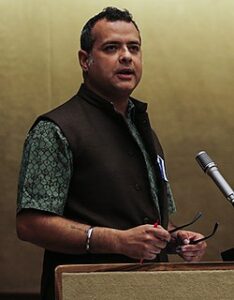
Vijay Prashad
03-05-2-24 ~ A group of young people in Paris are enjoying a drink in a café on an unseasonably warm evening. The conversation drifts into politics, but—as one young woman says—“Let’s not talk about France.” The others nod their assent. They focus on the U.S. presidential election, a slight bit of Gallic arrogance at play as they mock the near certainty that the main candidates will be President Joe Biden and former President Donald Trump. Biden is 81 years old and Trump is 77. A Special Counsel in the United States has called Biden an “elderly man with a poor memory,” hardly the words required to inspire confidence in the president. Trying to defend himself, Biden made the kind of gaffe that is fodder for online memes and affirmed the report that he tried to undermine: he called President Abdel Fattah El-Sisi of Egypt the “president of Mexico.” No new evidence is required, meanwhile, to mock the candidacy of Trump. “Is this the best that the United States can offer?” asks Claudine, a young student at a prestigious Parisian college.
These young people are aware enough that what appears to be comical on the other side of the Atlantic—the U.S. presidential election—is no less ridiculous, and of course less dangerous, in Europe. When I ask them what they think about the main European leaders—Olaf Scholz of Germany and Emmanuel Macron of France—they shrug, and the words “imbecilic” and “non-entity” enter the discussion. Near Les Halles, these young people have just been at a demonstration to end the Israeli bombing of the Rafah region of Gaza. “Rafah is the size of Heathrow Airport,” says a young student from England who is spending 2024 in France. That none of the European leaders have spoken plainly about the death and destruction in Gaza troubles them, and they say that they are not alone in these feelings. Many of their fellow students feel the same way. The approval ratings for Scholz and Macron decline with each week. Neither the German nor the French public believes that these men can reverse the economic decline or stop the wars in either Gaza or Ukraine. Claudine is upset that the governments of the Global North have decided to cut their funding for the United Nations Relief and Works Agency (UNRWA), the UN Palestine agency, although another young person, Oumar, interjects that Brazil’s President Lula has said that his country will donate money to UNRWA. Everyone nods.
A week later, news comes that a young soldier in the United States Airforce—Aaron Bushnell—has decided to take his own life, saying that he will no longer be complicit in the genocide against the Palestinians. When asked about the death of Bushnell, White House press secretary Karine Jean-Pierre said that the President is “aware” and that it is a “horrible tragedy.” But there was no statement about why the young man took his life, and nothing to assuage a tense public about the implications of this act. Eating an ice cream in New York, U.S. President Joe Biden said that he hoped that there would be a ceasefire “by the beginning of the weekend” but then moved it to “by next Monday.” The meandering statements, the pledge for a ceasefire alongside the prevarication, and the arms deliveries do not raise the confidence of anyone in Biden or his peers in Europe. With the Emir of Qatar beside him, France’s President Emmanuel Macron called for a “lasting ceasefire.” These phrases—“lasting ceasefire” and “sustainable ceasefire”—have been bandied about with these adjectives (lasting, sustainable) designed to dilute the commitment to a ceasefire and to pretend that they are actually in favor of an end to the war when they continue to say that they are behind Israel’s bombing runs.
In London, the UK Parliament had a comical collapse in the face of a Scottish National Party (SNP) resolution for a ceasefire. Rather than allow a vote to show the actual opinions of their members, both the Labour Party and the Conservative Party went into a tailspin and the Parliament’s speaker broke rules to ensure that the elected officials did not have to go on the record against a ceasefire. Brendan O’Hara of the SNP put the issue plainly before the Parliament before his words and the SNP resolution was set aside: “Some will have to say that they chose to engage in a debate on semantics over ‘sustainable’ or ‘humanitarian’ pauses, while others will say that they chose to give Netanyahu both the weapons and the political cover that he required to prosecute his relentless war.”
Global desire for an immediate stop to the Israeli bombing is now at an all-time high. For the third time, the United States vetoed a UN resolution in the Security Council to compel the Israelis to stop the bombing. That the United States and its European allies continue to back Israel despite the widespread disgust at this war—exemplified by the death of Aaron Bushnell—raises the frustration with the leadership of the Global North. What is so particularly bewildering is that large sections of the population in the countries of the North want an immediate ceasefire, and yet their leaders disregard their opinions. One survey shows that two-thirds of voters in the United States—including majorities of Democrats (77 percent), Independents (69 percent), and Republicans (56 percent)—are in favor of a ceasefire in Gaza. Interestingly, 59 percent of U.S. voters say that Palestinians must be guaranteed the right to return to their homes in Gaza, while 52 percent said that peace talks must be held for a two-state solution. These are all positions that are ignored by the main political class on both sides of the Atlantic Ocean. The qualifications of “lasting” and “sustainable” only increase cynicism among populations that watch their political leadership ignore their insistence on an immediate ceasefire.
Clarity is not to be sought in the White House, in No. 10 Downing Street, or in the Élysée Palace. It is found in the words of ordinary people in these countries who are heartsick regarding the violence. Protests seem to increase in intensity as the death toll rises. What is the reaction to these protests? In the United Kingdom, members of parliament complained that these protests are putting the police under “sustained pressure.” That is perhaps the point of the protests.
By Vijay Prashad
Author Bio: This article was produced by Globetrotter.
Vijay Prashad is an Indian historian, editor, and journalist. He is a writing fellow and chief correspondent at Globetrotter. He is an editor of LeftWord Books and the director of Tricontinental: Institute for Social Research. He has written more than 20 books, including The Darker Nations and The Poorer Nations. His latest books are Struggle Makes Us Human: Learning from Movements for Socialism and (with Noam Chomsky) The Withdrawal: Iraq, Libya, Afghanistan, and the Fragility of U.S. Power.
Source: Globetrotter
Boycott Israel? Maybe So, But Certainly Not At The Request Of ‘Palestine Solidarity Tilburg’
03-06-2024 ~ An open letter in my mailbox
On Thursday, February 29, an open letter (General Open Letter to All Faculties – Boycott Israeli Universities) from Palestine Solidarity Tilburg arrived in my university mailbox. The open letter came from a gmail account and was not signed by any person’s name.
Nowhere does Palestine Solidarity Tilburg introduce itself in the letter; there was also no website; the only clue is that the letter talks about ‘we as academics’. I therefore assumed that this concerns a group of people affiliated with Tilburg University. And the open letter also exudes that idea. It may be a number of my colleagues who took the initiative. The email is addressed to ‘deans, faculty boards, program directors, professors, lecturers, PhD candidates, researchers, and staff members of Tilburg School of Humanities and Digital Sciences’; in short, everyone, except the support staff of TSHD, and the latter surprised me because those staff can also feel and feel involved in the events in Gaza.
Hamas, October 7, genocide
The running text of the open letter mentions the word Hamas only once, but not in the capacity of the terrorist organization responsible for the murder, rape and torture of 1,200 Israeli civilians on October 7, 2023. The word ‘genocide’ appears 32 times and the word ‘genocidal’ four times. The date of October 7 is only mentioned as a point in time from when Israelis are said to have killed 28,775 Palestinians in Gaza (until February 19, 2024). Not a word about the Hamas massacre on October 7; not a word of sympathy for the victims. And the more words about Israel’s alleged genocide of the Palestinians. The open letter calls on Tilburg University to sever its partnerships with Israeli universities and institutions, especially because Israel would commit genocide against the Palestinian people.
My voice
In this piece I would like to voice a counterpoint and argue that if Tilburg University were to initiate such a boycott, it would in any case not do so in response to the open letter but on the basis of its own considerations. Furthermore, I personally believe that a boycott makes no sense and finally I would like to indicate why I think the open letter is very one-sided and therefore academically speaking reprehensible.
The Hamas Charter
Anyone who reads the Hamas charter fears the worst for the state of Israel. The charter reads like an ‘it is either us or them’ battle and should Hamas win the battle against Israel, nothing will be left of the Jewish state. In that respect, Hamas showed its true colors on October 7 when it went on a rampage of murder and rape in the affected Israeli villages and towns. You shouldn’t expect compassion from such an enemy. It is therefore not surprising that Israel wants to defend itself and do everything it can to destroy Hamas. For Israel goes as well that it is ‘them or us’. The open letter does not in any way mention Israel’s plight in this conflict and that is regrettable. The open letter gives me the impression that its authors do not even grant Israel a right to exist. Their ideas seem to fit into the discourse that stipulates that the establishment of the state of Israel was a neo-colonialist maneuver by the West to, among other things, maintain control in West Asia (the photo below the open letter depicts a banner on Tilburg University with the text ‘Cut ties with Israeli colonizers’; nomen est omen I would say). I would really like to know from the authors of the letter whether Israel is allowed to exist as a state at all.
Genocide
As mentioned, the word genocide is often mentioned in the letter. The letter refers to authoritative scholars in the field of genocide who state that Israel is unequivocally engaged in genocide. Yet the International Court in The Hague stated in its ruling earlier this year that ‘Israel is plausibly committing genocide’. It appears as if it is happening, the court says, but not that it is actually happening and Israel is called on to ensure that it does not happen. In the meantime, there are also scientists who argue that something more is needed to classify the current situation in Gaza as genocide. In no way does the open letter allow these voices to have their say, even though the senders of the letter give the impression of being academically trained. If that is the case, then you might expect them to show a really balanced analysis of whether Israel is actually committing a genocide. By the way, it is striking that the email contains the symbol , a picture of Palestine, ‘from the river to the sea’, which is interpreted, among other things, as the wish of Hamas and other Palestinians to establish a ‘Jew-free’ state of Palestine . Here too, nomen is omen. The picture is not in the open letter. Read more
Discarding Old Theories On The Path To Finding The First Humans Outside Africa
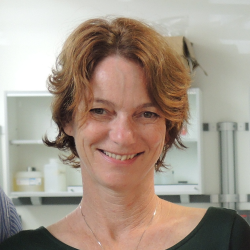
Deborah Barsky
03-06-2024 ~ Spectacular archeological finds reveal the true past of the first Europeans.
When I began studying human prehistory in the mid-1990s, little did I know that I would witness a paradigm shift in our understanding of when the first humans settled in Western Eurasia firsthand. At the time, I was preparing my master’s thesis about the stone tools from the Caune de l’Arago cave, an Acheulian site situated in the picturesque wine-producing village of Tautavel in southwestern France.
On a main road leading into the village, travelers encounter a road sign for Tautavel’s Prehistory Museum that reads: “L’Homme le plus ancien de l’Europe” (French for, The oldest Man of Europe). Excavations in the cave in 1971 yielded a semi-complete cranial fossil attributed to Homo erectus tautavelensis (a subspecies of H. erectus), estimated at 450,000 years old.
In 1995, I was invited to attend the International Congress of Human Paleontology that was held in the Andalusian town of Orce, Spain, where some very important archeological discoveries had recently been brought to light. Unbeknownst to me, the visit would not be my last.
An influential theory, known as the Short Chronology, published just one year prior to the congress in Orce, proposed that early humans only durably occupied Western Europe after around 500,000 years ago. The theory was published after the proceedings of a conference held in Tautavel in 1993: The Earliest Occupation of Europe, during which distinguished researchers reviewed and discussed the archeological evidence for the first sustained human presence in Europe. Even as the Short Chronology hypothesis took hold against the proponents of a Long Chronology (proposing that hominins were in Europe as early as 2 million years ago), it rapidly had to be revisited in light of a series of groundbreaking discoveries that would indelibly change the chrono-geographical setting of the first humans “out of Africa.”
From the 1980s, the UNESCO World Heritage site of Dmanisi, located in the Republic of Georgia between the Black and Caspian seas, began to report spectacular fossils of extinct animal species and then Oldowan stone tools. These findings were unearthed below the ruins of the Medieval town of Dmanisi in a volcanic sedimentary context dated to around 1.8 million years old. The vast open-air site, already well-known for its human settlements since the Bronze Age, continues to yield far earlier Paleolithic findings like those first exposed during excavations of the Medieval cellars. In 1991 a human mandible was discovered, beginning an astonishing series of finds that continue to contribute precious data about this little-known period of human prehistory. Ongoing excavations at Dmanisi have unearthed exceptionally well-preserved and diverse faunal remains (including extinct species of deer, horse, rhino, giraffe, and ostrich, as well as carnivores like saber-toothed cats, and giant cheetahs), along with stone tools attributed to the Oldowan cultural complex. In addition, the site has provided an unprecedented assemblage of fossil hominin remains that display a variety of anatomical features that led paleoanthropologists to create a distinct denomination for them: H. georgicus.
Prior to these discoveries, which are close to 2 million years old, only a few prehistorians had seriously considered the possibility that hominin groups were thriving outside of Africa even 1 million years ago. Their postulate was based in part on findings of primitive stone tools, often in agriculturally disturbed open-air contexts that are difficult to date with any precision, while few cave sites had produced convincing evidence. Indisputably, the exceptionally abundant, well-dated, and exquisitely preserved finds from Dmanisi provided irrefutable proof that hominins were indeed living “at the Gates of Europe” far earlier than previously believed. With the evidence from the Early Acheulian ‘Ubeidiya site in the Jordan Rift Valley (one of the earliest known H. erectus sites dating to around 1.5 million years ago), Dmanisi pushed back the date for the arrival of hominins in Eurasia, raising important questions, in particular, about which hominin was the first to successfully settle in lands situated outside of Africa.
The upheaval that followed in the wake of the Dmanisi discoveries—and those that would quickly follow—tells the story of how our own sociohistorical contexts influence what we think or what we believe when faced with hard evidence from the archeological record. There is no doubt that the extreme antiquity of the Dmanisi hominins created a paradigm shift within the scientific community that required rethinking the ideas entrenched in the dominant academic mindset. In retrospect, it demanded a total reconfiguration of the widely accepted scenario in which H. erectus was lauded as the first “colonizer” (a term clearly unfitting to describe ancient population dynamics and whose connotations anachronistically denote the modern concept of borders) of virgin territories outside of Africa. According to this scenario, H. erectus was put forward as the most likely candidate for undertaking such an achievement because it was doted with a larger brain and longer legs than its predecessors, and because it possessed a more advanced (Acheulian) toolkit, and even mastered fire making. Today, paleoanthropologists are still debating whether the Dmanisi hominins might have had some relationship with the African H. habilis, or if they were more closely related to the H. erectus.
Discoveries made in the 1990s at two sites in Orce; Barranco León and Fuente Nueva 3, would play a pivotal role in changing our ideas about the first peopling of Europe. The sites are situated in the Guadix-Baza Basin in northeastern Granada, an area long known for its extraordinarily preserved archeo-paleontological treasures dating to different periods. Today, Orce is a prominent site in the UNESCO Granada Global Geopark. Located nearly 1,000 meters above mean sea level, Orce currently offers a unique and arid landscape shaped by millions of years of accumulated geological deposits and erosion that fashioned a deeply faulted landscape, interspersed with vast badlands and surrounded by mountains. The scenery was very different more than 1 million years ago, however, when much of the area was occupied by a large saline lake and fresh water rushing forth from the surrounding mountains and the natural springs that still characterize the zone. The age of these two sites has been evaluated by a combination of dating methods to, respectively, 1.4 million and 1.3 million years ago.
Systematic excavations that are still ongoing began at the sites after indisputably human-made stone tools knapped from local flint and limestone were discovered in the early 1990s, in association with a broad range of faunal remains, including a huge species of mammoth (M. meridionalis), rhinos, horses, bison, and hippopotamus, as well as carnivorous predators like hyenas, wolves, saber-toothed cats, and wild dogs. Unsurprisingly, the anthropic nature of such ancient stone tools was a hotly debated topic during the Orce congress in 1995. These multilayered open-air sites, situated on the fluctuating lake margin in a swampy environment frequented by many animals, provided an attractive scenario for the hominins who used their stone tools to create their own niche, even withstanding changes in climatic conditions more than 1 million years ago. Their presence predates the oldest documented Acheulian-producing hominins in Europe, demonstrating the efficacy of Oldowan toolkits and underpinning the need for changes in the dominant paradigms about the first inhabitants of Europe.
Buttressing the indisputable evidence emanating from these well-dated and systematically excavated sites came the announcement of groundbreaking discoveries from level TD-6 of the Gran Dolina site at the Sierra de Atapuerca in Burgos, Spain, where a new set of hominin remains, stone tools and fauna was published in 1995. The spectacular hominin fossils, some 0.9 million years old, presented a distinct set of anatomical traits, justifying the naming of a new species: H. antecessor, finally putting to rest any remaining skeptics questioning the veracity of the great antiquity of the arrival of the genus Homo in Europe.
Since these pioneering discoveries were made known, the number of excavated sites with stone tools attesting to a hominin presence predating 1 million years ago continues to increase, in particular, around the Mediterranean basin. While we still know relatively little about the hominins responsible for these accumulations, the fossil record is steadily increasing in pace with continued discoveries and excavations in some of the key areas. In 2008, a new set of hominin remains, stone tools, and fauna was published from level TE-9 of the Sima del Elefante site in the Sierra de Atapuerca, with an age of around 1.2 million years old. Then, in 2013, the discovery of a human deciduous molar was published from Orce’s Barranco León site in a level dated close to 1.4 million years old. Meanwhile, at the Eastern end of Eurasia, a growing body of evidence from China suggests that hominins were present there nearly 2 million years ago.
Archeology is teaching us that in order to truly understand how humans came to expand across the globe during the Lower Paleolithic, we need to keep our minds open and embrace the science—even if it means modifying or even discarding the long-held ideas that are shaping our own historical moment.
By Deborah Barsky
Author Bio:
Deborah Barsky is a writing fellow for the Human Bridges project of the Independent Media Institute, a researcher at the Catalan Institute of Human Paleoecology and Social Evolution, and an associate professor at the Rovira i Virgili University in Tarragona, Spain, with the Open University of Catalonia (UOC). She is the author of Human Prehistory: Exploring the Past to Understand the Future (Cambridge University Press, 2022).
Source: Human Bridges
Credit Line: This article was produced by Human Bridges.
PVV Blog 5 – The ‘Monocultural Confession’ Of The Dutch Party For Freedom
 03-05-2024 ~ Party for Freedom MP and Speaker of Parliament Martin Bosma presents the ‘20 foundations of the Multicultural Confession of Faith’ in chapter 7b of his book De schijn-élite van de valse munters.
This ‘Multicultural Confession of Faith’ is said to have ‘made a great impression on the elites of the Netherlands’. This ideology would ‘involve the flattening of the leading culture in favor of minority/immigrant cultures’, Bosma claims. The multicultural ideology is, according to Bosma, based on a number of foundations, namely the following:
• 1 Multicultural societies are superior to monocultural societies;
• 2 Mass immigration is inevitable, the influx can be attributed to globalization;
• 3 Mass immigration is the result of guest labor;
• 4 Mass immigration is good for the economy, for healthcare and the welfare state. We need immigrants;
• 5 We also have a moral obligation to welcome large groups of foreigners as a way to make up for the Second World War, our colonial past, slavery or the Crusades;
• 6 Mass immigration should be viewed purely nationally. The behavior of Muslims in other countries is of no importance to the Netherlands;
• 7 Today’s mass immigration can be compared to the arrival of immigrants in the sixteenth century (to the Netherlands). Muslims will assimilate, it is a matter of time. Muslims are Huguenots in the making;
• 8 Islam is a religion and will therefore develop like all other religions, namely towards a liberal version or even an Enlightenment;
• 9 There is a moderate Islam;
• 10 Christians have also had their pranks, so don’t whine about Islam;
• 11 The Bible also contains strange things, just like the Koran does. So there is no problem;
• 12 Muslims’ commitment to their ideology should be denied or underestimated, problems they may cause are explained by socio-economic conditions;
• 13 At most, these problems concern a single Moroccan street thief. Demographically, the Muslim influx poses no problem whatsoever;
• 14 Muslims form a ‘vulnerable group’ and therefore deserve extra protection from the government;
• 15 Welfare state and immigration country go well together;
• 16 The problems started with the Party for Freedom. If Wilders would just stop, the issues would soon be over;
• 17 Anyone who opposes Islamization belongs to the extreme right;
• 18 The lesson of the Second World War is that any form of patriotism or nationalism is wrong and tolerance is always good;
• 19 The ‘May 1968-left’ movement, which was ultimately wrong about communism, is now right about Islam and the multicultural society’.
And then Bosma writes before formulating the twentieth article:
‘And especially this one:
*20 If the multiculturalists are wrong, the Netherlands and the West will get a second chance’.
Dixit Martin Bosma. And as a final comment he states the following:
‘These foundations have never been thought through or proven. In fact, they are all wrong’.
The elite impressed by the confession of faith
Martin Bosma has placed himself in the world of thought of ‘the elites’ and has from that perspective considered society, especially when it comes to ‘mass immigration’ and ‘Islam’. He has not defined who constitutes ‘the elites’ nor has he researched or quoted what the elites really think about these topics. It is his interpretation of what ‘the elites’ think. The foundation on which this thought exercise stands is therefore weak. But this empirical or scientific argument is of course not important to Bosma. Bible verse Isaiah 20:5 in his book is leading. The text reads as follows:
“Woe to those who call evil good and good evil; who represent darkness as light and light as darkness; who pass off bitter as sweet and sweet as bitter’.
For Martin Bosma, the world consists of either good or evil and woe to those who call evil good or good evil. It is therefore not surprising that Bosma states that the 20 foundations of the ‘Multicultural Creed’ are incorrect or ‘evil’.
The ‘Monocultural Creed’
If all 20 points of the Multicultural Creed are incorrect, and therefore ‘evil’, then the Party for Freedom version of that creed would be ‘good’, and would be called the ‘Monocultural Creed’, and the 20 statements would read as follows :
• 1 ‘Multicultural societies are not superior to monocultural societies;
• 2 Mass immigration is not inevitable, the influx cannot be attributed to globalization;
• 3 Mass immigration is not the result of guest labor;
• 4 Mass immigration is bad for the economy, for healthcare and the welfare state. We don’t need immigrants;
• 5 We do not have a moral obligation to welcome large groups of foreigners as a way to make up for the Second World War, our colonial past, slavery or the Crusades;
• 6 Mass immigration should not be viewed nationally. The behavior of Muslims in other countries is of great importance to the Netherlands;
• 7 Today’s mass immigration cannot be compared to the arrival of immigrants in the sixteenth century. Muslims are not going to assimilate, it is not a matter of time. Muslims are not Huguenots in the making;
• 8 Islam is not a religion and will therefore not develop like all other religions, namely in the direction of a liberal version or even an Enlightenment;
• 9 There is no moderate Islam;
• 10 Christians have not (had) any pranks, so the more reason there is to whine about Islam;
11 There are no strange things in the Bible, unlike the Koran. So there is a problem;
• 12 The commitment of Muslims to their ideology should be recognized or not underestimated, problems they cause are not explained by socio-economic conditions;
• 13 These problems are really not about a single Moroccan street thief. Demographically, the Muslim influx poses a major problem;
• 14 Muslims do not form a ‘vulnerable group’ and therefore do not deserve extra protection from the government;
• 15 Welfare state and immigration country do not go together at all;
• 16 The problems did not start with the Party for Freedom. If Wilders just stops, the contradictions will certainly not be over;
• 17 Anyone who opposes Islamization is not extreme-right;
• 18 The lesson of the Second World War is that any form of patriotism or nationalism is good and tolerance is not good;
• 19 The ‘May-1968-left’ movement, which was ultimately wrong about communism, is now wrong about Islam and the multicultural society;
• 20 If the multiculturalists are wrong, the Netherlands and the West will not get a second chance’.
Further analysis
A guiding principle in this series is the question of ‘whether things are as bad as they look’.
The ideas of the Party for Freedom as expressed in the book by parliament chairman and party ideologue Marin Bosma are sharp and reject all forms of migration and Islam.
When the party sat down in governmental coalition negotiations the party withdrew a number of unconstitutional bills relating to Muslims in the Netherlands. Party leader Wilders also conformed to the view of the other three potential coalition parties, that Islam is a religion that enjoys protection under the Constitution, in contrast to his previous view that Islam is a ‘totalitarian ideology’.
But, religion or ideology, party leader Wilders reiterated his view on Islam in a parliamentary debate: ‘So, I still think that Islam as a religion is a reprehensible, hateful religion that incites violence. So the (Party’s) position on Islam will not change.’
If the Party for Freedom enters a new government, it is certain to me that the 20 statements of the ‘negative monocultural Party for Freedom ideology’ will become visible in one way or the other, directly or indirectly, in statements and bills from a possible Party for Freedom government.
A party that has spoken out so clearly in negative terms about immigration and Islam does not deny its roots. Impossible.



Search this site
About
Support
Like us on Facebook
Archives
- April 2024
- March 2024
- February 2024
- January 2024
- December 2023
- November 2023
- October 2023
- September 2023
- August 2023
- July 2023
- June 2023
- May 2023
- April 2023
- March 2023
- February 2023
- January 2023
- December 2022
- November 2022
- October 2022
- September 2022
- August 2022
- July 2022
- June 2022
- May 2022
- April 2022
- March 2022
- February 2022
- January 2022
- December 2021
- November 2021
- October 2021
- September 2021
- August 2021
- July 2021
- June 2021
- May 2021
- April 2021
- March 2021
- February 2021
- January 2021
- December 2020
- November 2020
- October 2020
- September 2020
- August 2020
- July 2020
- June 2020
- May 2020
- April 2020
- March 2020
- February 2020
- January 2020
- December 2019
- November 2019
- October 2019
- September 2019
- August 2019
- July 2019
- June 2019
- May 2019
- April 2019
- March 2019
- February 2019
- January 2019
- December 2018
- November 2018
- October 2018
- September 2018
- August 2018
- July 2018
- June 2018
- May 2018
- April 2018
- March 2018
- February 2018
- January 2018
- December 2017
- November 2017
- October 2017
- September 2017
- August 2017
- July 2017
- June 2017
- May 2017
- April 2017
- March 2017
- February 2017
- January 2017
- December 2016
- November 2016
- October 2016
- September 2016
- August 2016
- July 2016
- June 2016
- May 2016
- April 2016
- March 2016
- February 2016
- January 2016
- December 2015
- November 2015
- October 2015
- September 2015
- August 2015
- July 2015
- June 2015
- May 2015
- April 2015
- March 2015
- February 2015
- January 2015
- December 2014
- November 2014
- October 2014
- September 2014
- August 2014
- July 2014
- June 2014
- May 2014
- April 2014
- March 2014
- February 2014
- January 2014
- December 2013
- November 2013
- October 2013
- September 2013
- August 2013
- July 2013
- June 2013
- May 2013
- April 2013
- March 2013
- February 2013
- January 2013
- December 2012
- November 2012
- October 2012
- September 2012
- August 2012
- July 2012
- June 2012
- May 2012
- April 2012
- March 2012
- February 2012
- January 2012
- December 2011
- November 2011
- October 2011
- September 2011
- July 2011
- June 2011
- May 2011
- April 2011
- March 2011
- February 2011
- January 2011